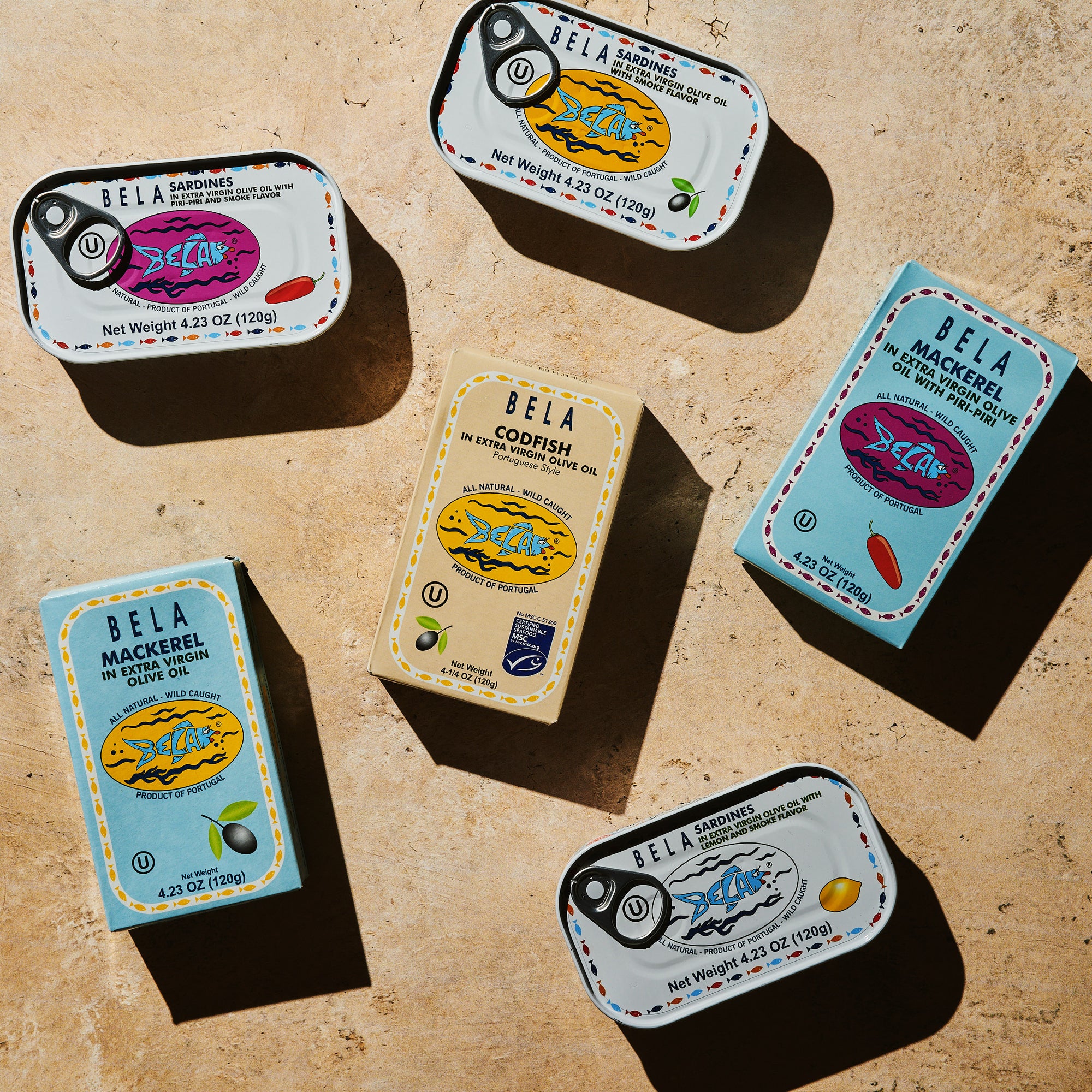
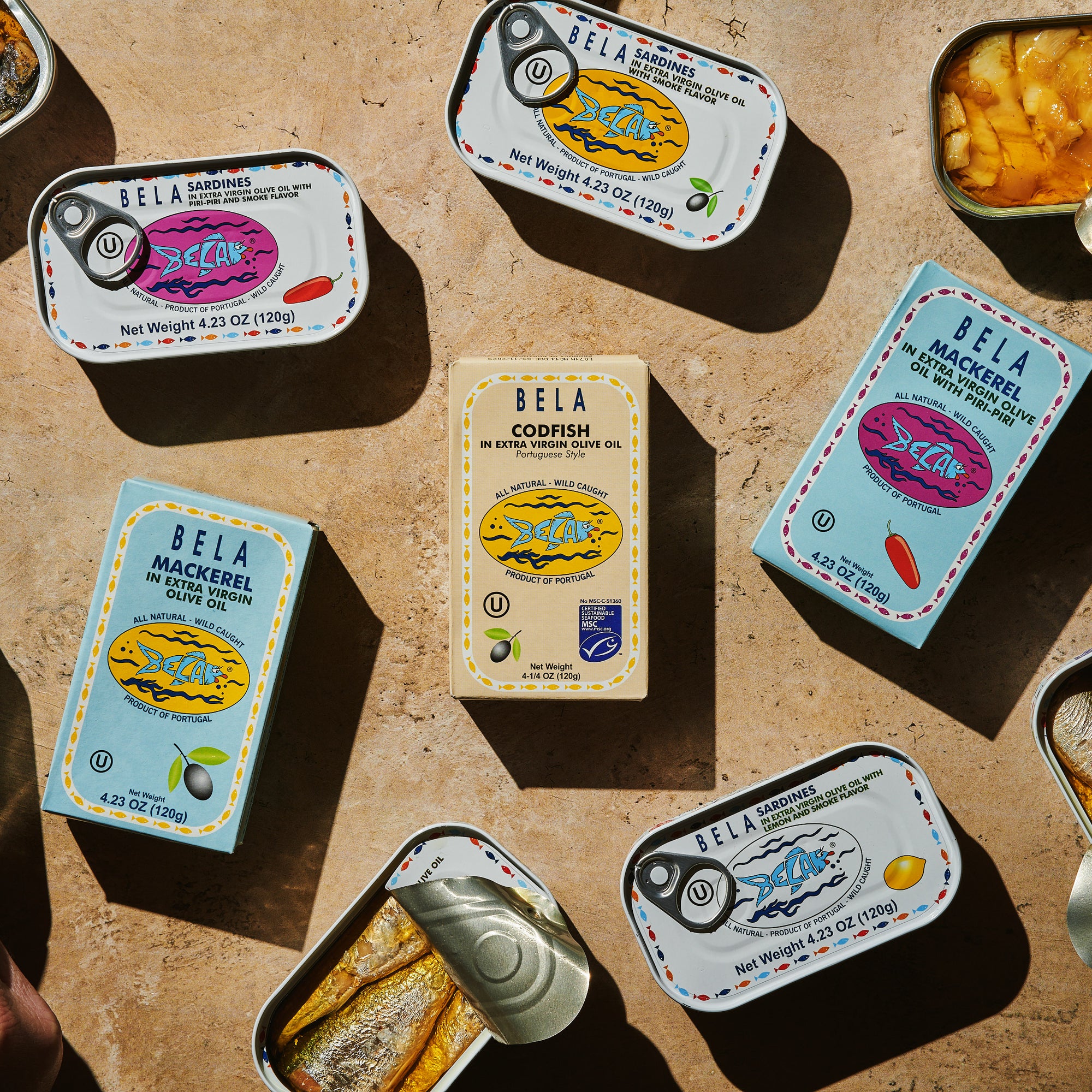
How a tin of sardines became a serious protein conversation

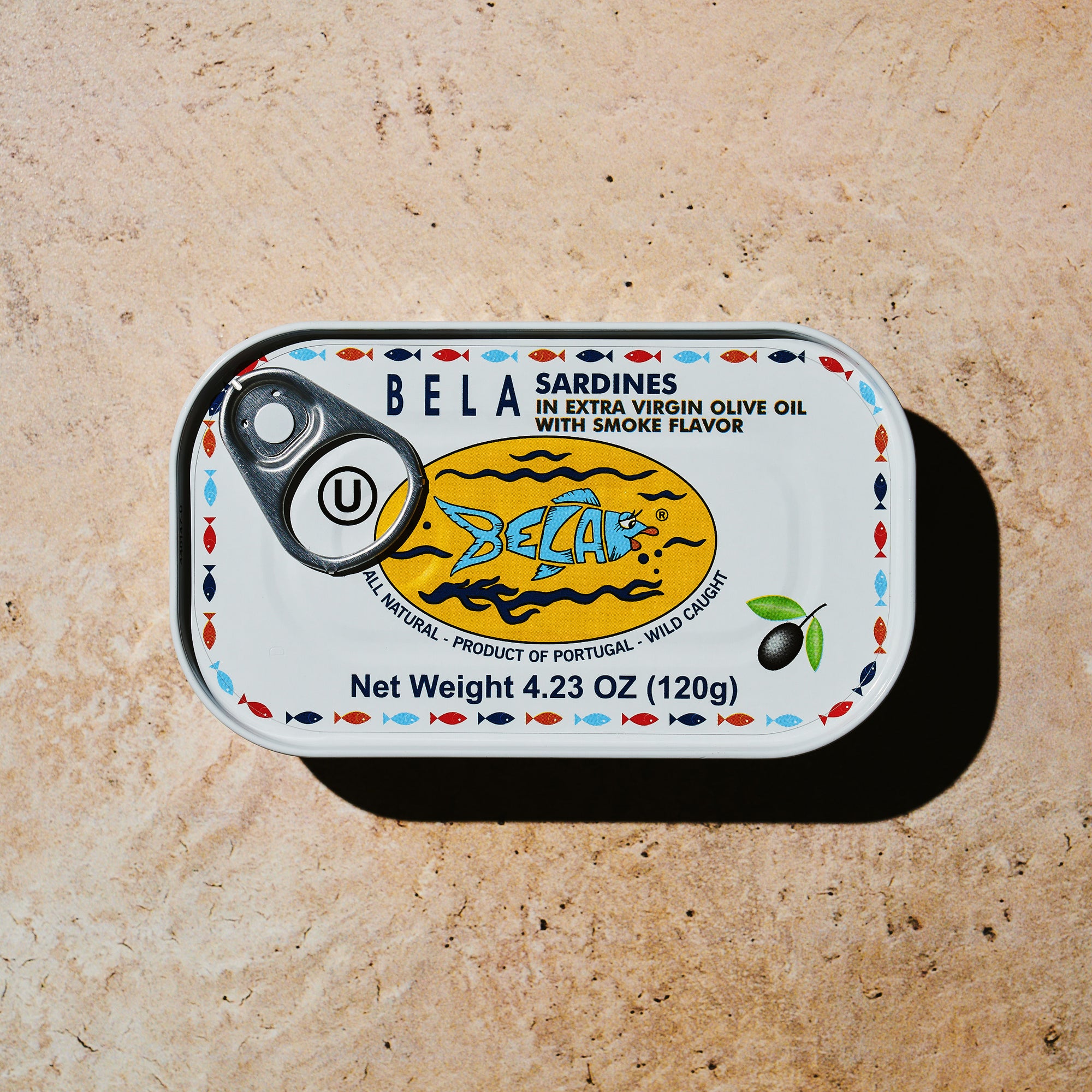
A single tin of BELA sardines delivers 20 grams of complete, whole-food protein in about five ingredients: sardines, organic extra virgin olive oil, sea salt, natural smoke flavor, and water. That's roughly the protein in three eggs or a scoop of whey, with the omega-3s, B12, calcium, and selenium that come standard when your protein arrives with fins.

Protein is having the kind of year usually reserved for skincare actives. In late 2025, 29% of Americans said they wanted to eat more of it — up ten points from the year before, with Gen Z, millennials, and GLP-1 users pushing that number well past 60%. At the same time, the 2025 IFIC Food & Health Survey clocked American confidence in the food supply at a thirteen-year low, with more than a quarter of consumers naming "minimal processing" and "fewer ingredients" as defining markers of a healthy food. Two trend lines, one obvious intersection — and it's where a tin of sardines lives.

How much protein is in a tin of BELA sardines

Twenty grams per tin. The fish, the olive oil, the salt, the smoke. No proprietary blend, no milk-protein top-off — what the fish brought to the table.

A 2025 review in the journal Foods confirmed that cooked sardines achieve a DIAAS score above 100 across every cooking method tested — the international benchmark for "excellent" protein quality. In food-science terms, the fish is a complete protein. In kitchen terms, it's a fish.

Protein Source Protein Amount Typical ingredient count
BELA Sardines in EVOO with Smoke Flavor 20g per tin 1 Tin
High-protein bar (Quest, Barebells, Clif Builders) 20–28g 1 Bar
Large eggs 19g 3 eggs
Chicken breast (3 oz cooked) 26g 1 Serving
Quarter Pounder with Cheese 20-30g 1 Burger
Whey protein 24g 1 Scoop
Plain non-fat Greek yogurt 24g 1 Cup

The fish runs the same protein range as a quarter-pounder and a scoop of whey, at roughly the same ingredient count as the egg.

A few caveats so we're being fair. A six-ounce chicken breast clears 50 grams of protein, which a sardine tin will never match. A scoop of whey is fast-acting and travels well in a gym bag. A Quarter Pounder is a Quarter Pounder, and sometimes a Quarter Pounder is the answer. None of that's the sardine's argument. The sardine's argument is that 20 grams of complete protein, with no cooking and a five-line ingredient list, is not nothing.

What else is in the tin

Beyond the protein, a standard sardine tin delivers roughly 1 to 1.5 grams of combined EPA and DHA omega-3s — the marine-sourced kind your body can't meaningfully produce on its own — plus 343% of the Daily Value of vitamin B12, around 88% DV of selenium, a meaningful dose of vitamin D, and up to a third of the Daily Value for calcium. The calcium is there because sardines are eaten with their soft, edible bones; the canning process gelifies those bones into a form that delivers calcium and its co-factor vitamin D in the same bite, which is an unusually efficient piece of food design.

The protein arrives with a small bag of vitamins. The matrix is the point.

Why "five ingredients or fewer" keeps showing up

Because consumers asked for it. Ingredion's 2025 global study of 14,000 consumers found Gen Z and millennials willing to pay 20–30% more for products with simple ingredients and short ingredient lists. Innova reports nearly three in four shoppers now reconsider a purchase based on the ingredient panel.

A BELA tin's ingredient list reads, in order: sardines, organic extra virgin olive oil, sea salt, natural smoke flavor, water. That isn't a marketing constraint we chose. It's how the fish has been packed in Portugal — in some cases by the same family-run canneries — for well over a century.

A short note on the smoke

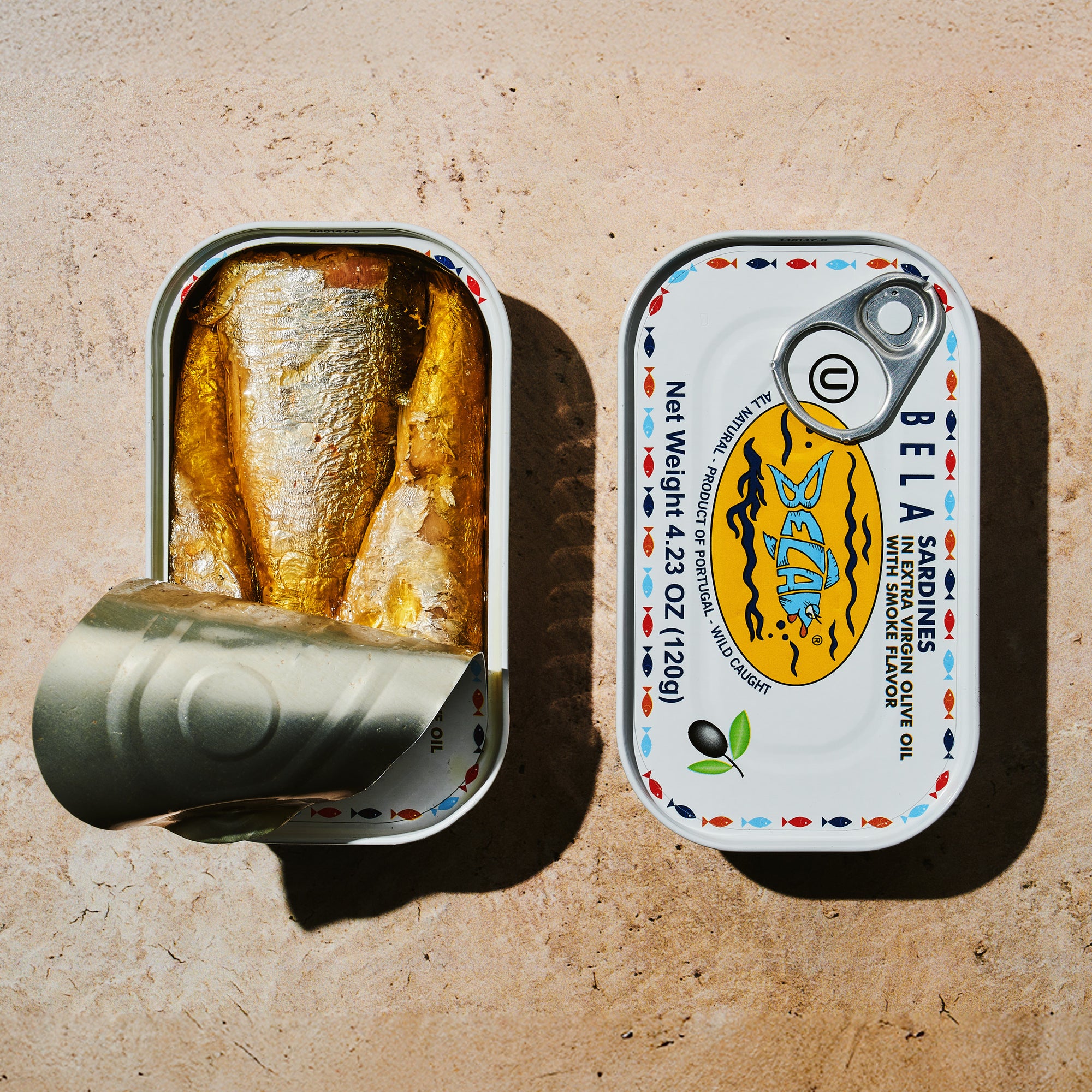
The Sardines in Extra Virgin Olive Oil with Smoke Flavor specifically. Cleaned, briefly cooked, smoked over hardwood, then sealed in olive oil with sea salt. The flavor on the fork is the one Lisbon eats every June at the Festas de Santo António, when the city grills sardines on streetside braziers and the smell travels block to block. Sardinha assada — grilled sardine — in a tin.

The smoke gives the fish a savory, woodfire layer that pairs harder than plain olive oil sardines do: rye toast with mustard and a cornichon, soft scrambled eggs, a baked potato with crème fraîche, a glass of something Iberian and slightly oxidative. BELA has been hand-packing these tins out of a centuries-old cannery in Olhão, on Portugal's Algarve coast, since 1997.

So — is a tin of sardines actually a high-protein snack

Yes. Twenty grams, complete amino acid profile, no cooking required, shelf-stable, built out of a five-line ingredient list a kindergartener can read aloud. We're not anti-bar or anti-powder. We're pro-fish — and we think the fish has been quietly outperforming a lot of louder products for a long time.

FAQ

Find the most frequently asked questions below.
  • Twenty grams per tin. That figure reflects BELA's spec specifically; some third-party databases list a different number for generic Atlantic sardines.

  • Yes. Sardines contain all nine essential amino acids in proportions that score above 100 on the DIAAS scale, the international benchmark for protein quality.

  • Per typical tin: tuna 17–22 g, salmon 17–22 g, mackerel 18–22 g, anchovies 13–16 g. BELA sardines sit at 20 g per tin, at the higher end of the everyday tinned-fish range.

  • Yes — sardines, organic extra virgin olive oil, sea salt, natural smoke flavor, water. No isolates, hydrolysates, or stabilizers.

  • Sardines are one of the highest-EPA/DHA, lowest-mercury fish available. One tin supplies roughly 1 to 1.5 grams of combined EPA and DHA — comfortably above standard daily marine-omega-3 guidance.

  • Sardines are forage fish — small, fast-reproducing, low on the food chain — and widely considered among the lower-impact wild seafood choices. Specific certification (such as MSC) varies by stock and fishery; BELA does not claim MSC across all SKUs.