Is Tinned Fish Processed? Sort Of — Here's the Real Answer
Is Tinned Fish Processed? Here’s What Actually Happens Inside the Tin
Everyone’s a label-reader now. Turn the package over, scan the back, decide in three seconds whether the thing in your hand counts as real food. It’s a good habit, mostly. But somewhere in the great pantry purge, tinned fish got swept up with the candy and the cereal — filed under “processed” and quietly put back.
That’s a fair instinct applied to the wrong tin.
“Processed” has become a catch-all for a much narrower problem. Once you know what the word is actually doing — and what happens to a sardine between the Atlantic and your toast — a BELA tin stops looking like a compromise and starts looking like one of the least fussed-with things on the shelf.

It starts as a real fish — wild sardines, fresh off the Atlantic.
The word “processed” is hiding a more useful word
Nutrition researchers stopped lumping all processing together a while ago. The framework most of them use now — called NOVA — sorts food by how much it’s been industrially formulated, not just whether it’s been touched at all.
Group one is food close to its natural state: a fish, a tomato, an egg. Group two is the basic stuff you cook with: salt, olive oil. Group three is what you get when you combine the two to preserve or improve something — cheese, canned beans, fresh bread. Tinned fish in olive oil lives right here. Group four is the one everyone’s actually worried about: ultra-processed food, built from additives, isolates, and ingredients you’d never find in a home kitchen — and the category researchers keep linking to the outcomes that made everyone start reading labels in the first place.
So is tinned fish “processed”? Technically, yes — in roughly the same way a jar of olives or a wedge of parmesan is. It is emphatically not ultra-processed. Those are two very different conversations wearing the same word.
What actually happens to a BELA tin
Here’s the whole story, start to finish. A fish is caught in the Atlantic. It’s cleaned and trimmed by hand, then given a short rest in sea salt.

Cooked on the racks, the old way — before it ever sees a tin.
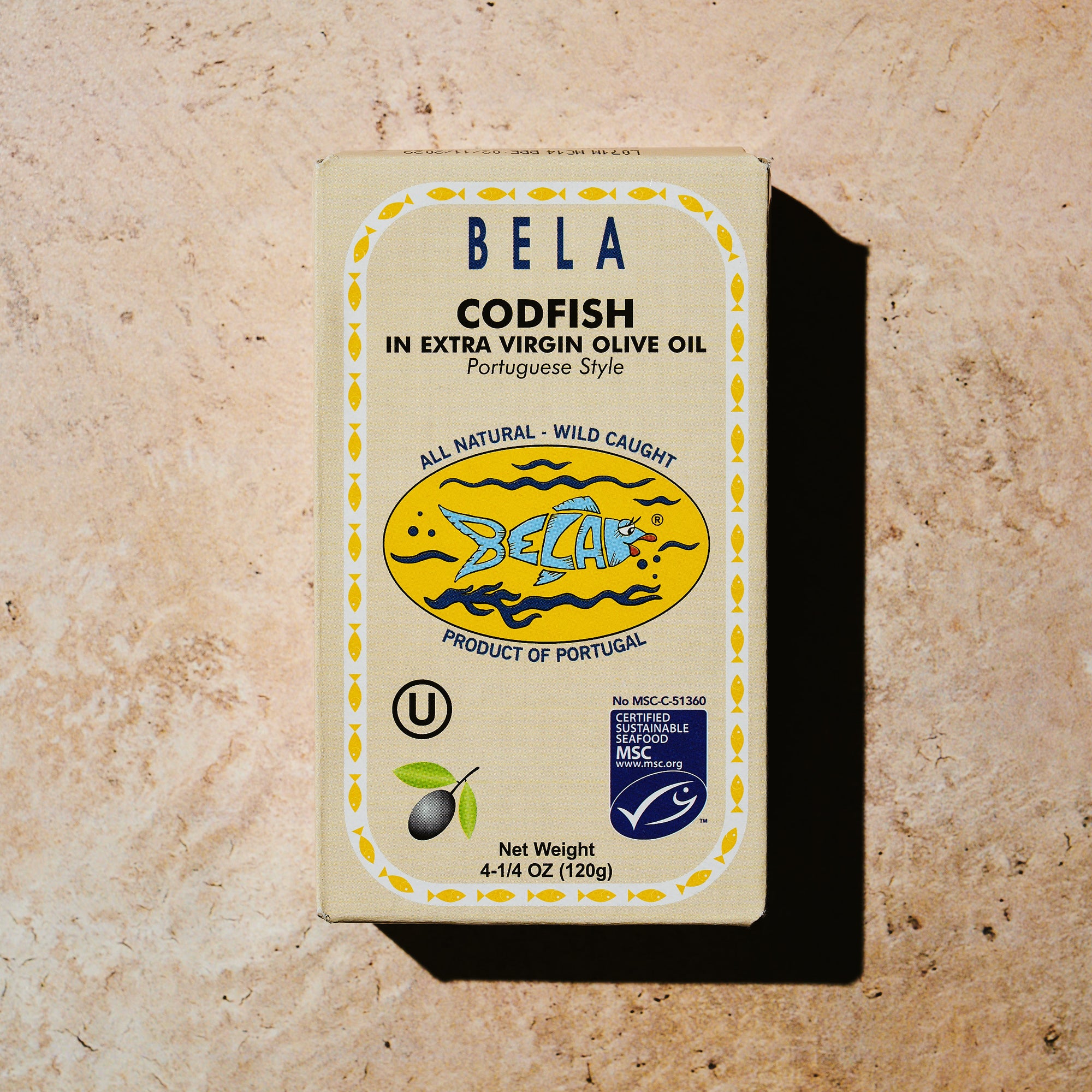
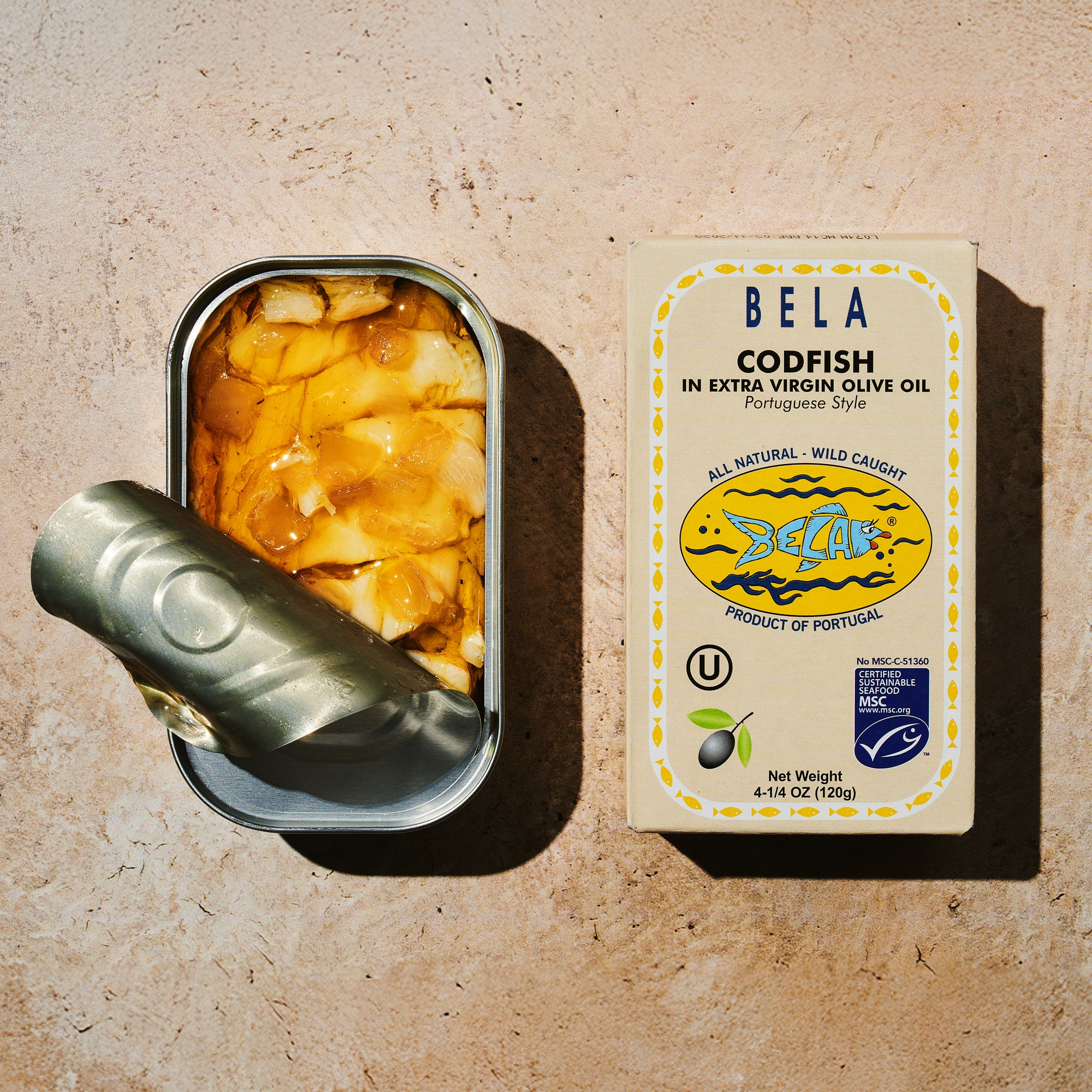
Then it’s cooked, and hand-packed into a tin in a family-run cannery in Olhão, Portugal, covered in organic extra virgin olive oil, and sealed shut.

Packed into the tin by hand, one row at a time.
The sealing and the heat are what make it keep — shelf-stable for years, with nothing added to get it there. That’s it. Salt, oil, heat, time.
No preservatives, because the method is the preservative — the same logic that’s kept Portuguese conservas on shelves for over a century, long before the food industry had a chemistry set.
The five-ingredient test
The fastest way to tell minimally handled food from the other kind is to read the back. With ultra-processed food, you run out of patience before you run out of ingredients.
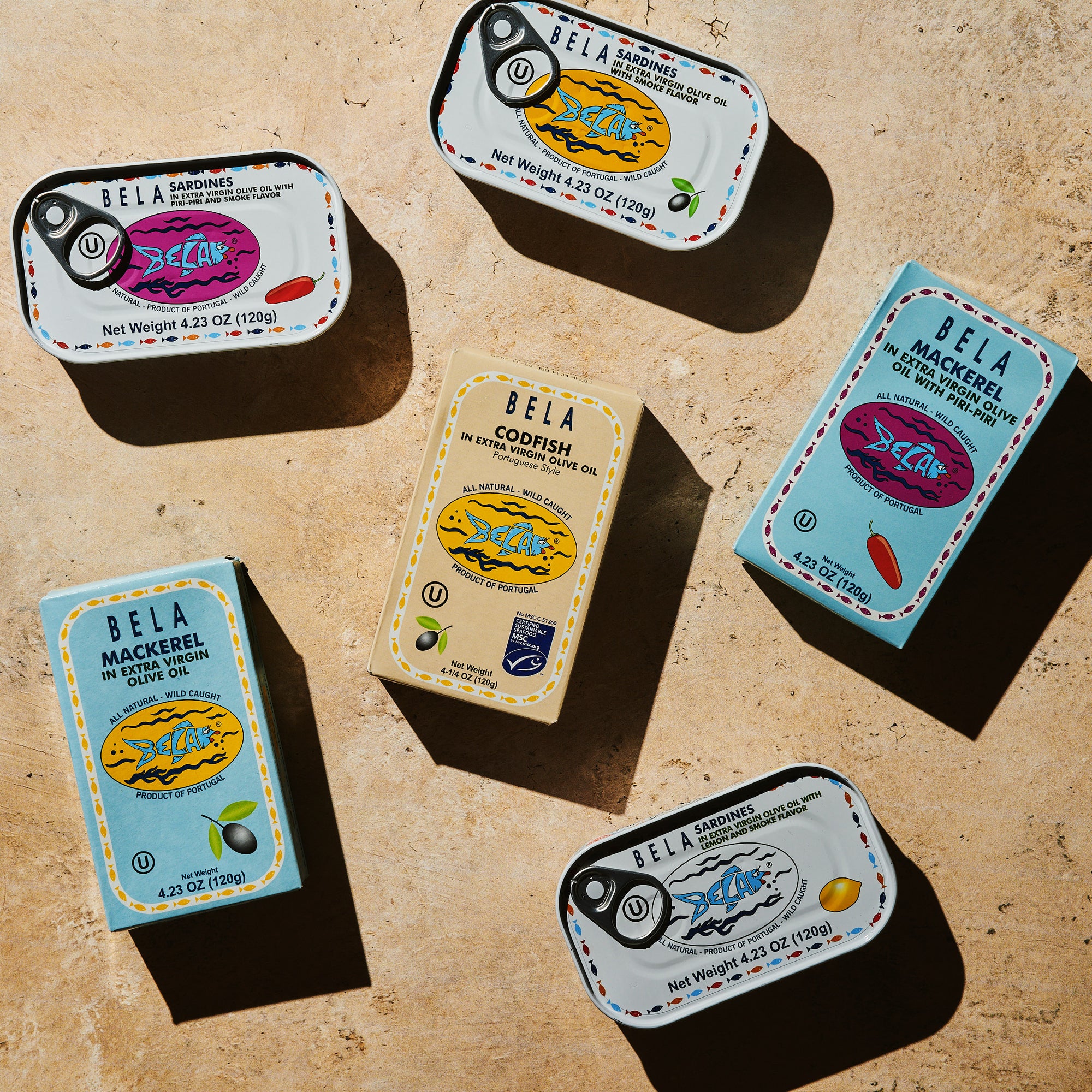
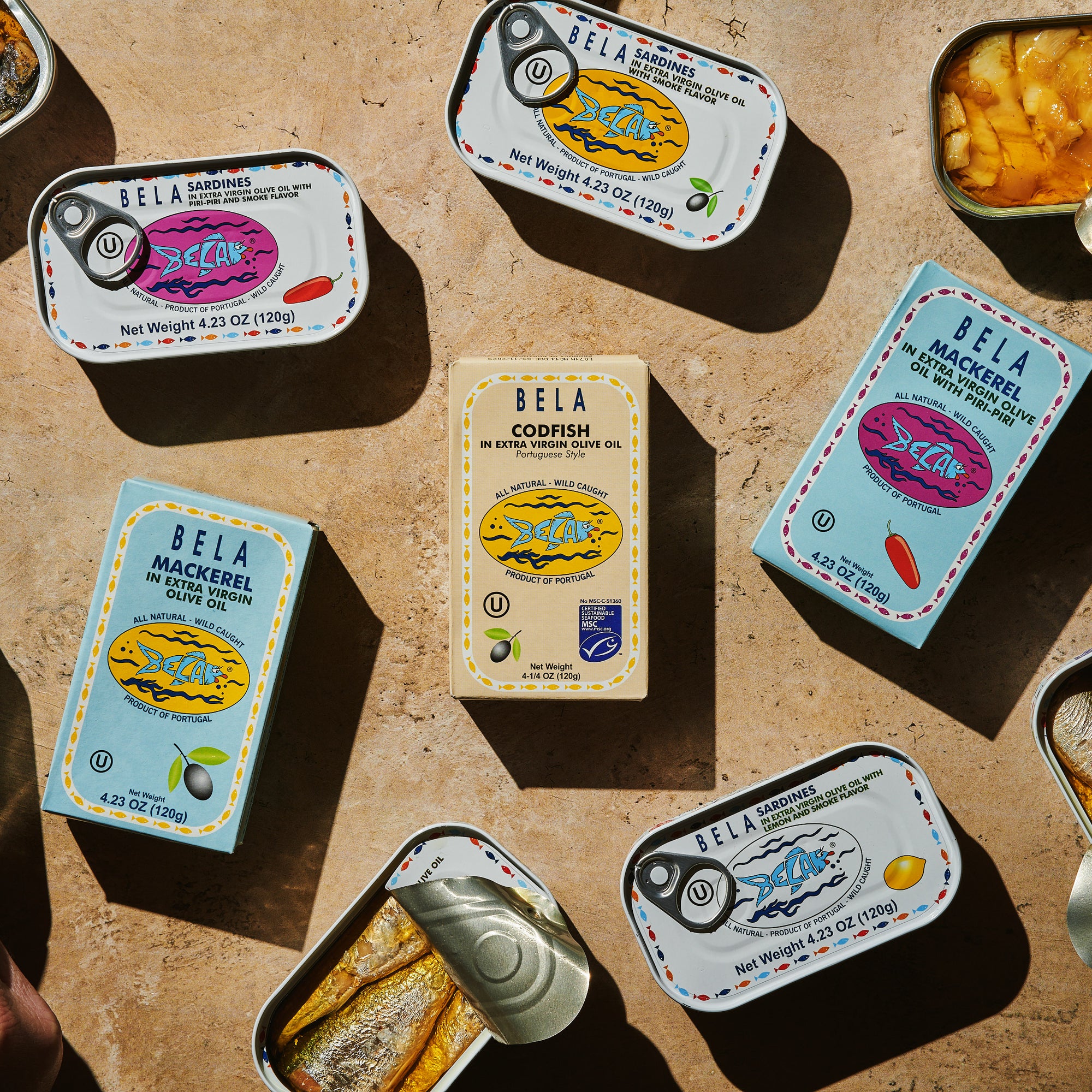
Turn over a tin of BELA sardines and the list is short enough to read out loud: fish, organic extra virgin olive oil, sea salt — five clean ingredients, give or take a slice of lemon or a little piri piri. No stabilizers. No “natural flavors.” Nothing you’d need to look up.

The whole ingredient list, right there on the back.
What you get instead is the stuff that was supposed to be there all along: around 20 grams of protein in a tin of sardines, the omega-3s that come standard with oily fish, and olive oil good enough that people spoon it onto bread after the fish is gone.
Why the old way is the whole point
BELA has been doing this since 1997, which by tinned-fish standards is recent — the method itself is generations older. When Joshua and Florence Scherz went looking for a cannery, they weren’t trying to invent anything. They were looking for people who still did it the slow way, in the place that never stopped: the Portuguese coast, where conservas is less a product category than a craft handed down.

Family-owned, veteran-owned — still on the floor where it’s made.
That’s the quiet advantage of a food that predates the additive era. There was never anything to strip out, because nothing extra went in. Family-owned, veteran-owned, hand-packed, one good fish at a time. “Unprocessed” isn’t quite the right word for it — but it’s a lot closer than the shelf next door.
So, should you worry about it?
Read your labels. Be suspicious of the long ones. But when the back of the tin lists a fish, some olive oil, and a little salt, you can put it in the cart and get on with your day.
That’s the whole pitch, really: real fish, handled simply, made to keep — and a seat saved for you at the table.